Industry Analysis
Eroom's Law: Innovation Isn't Broken, It's Just More Expensive
Eroom's Law is driven by three structural forces: trial complexity, the outsourcing premium, and a patient recruitment crisis.
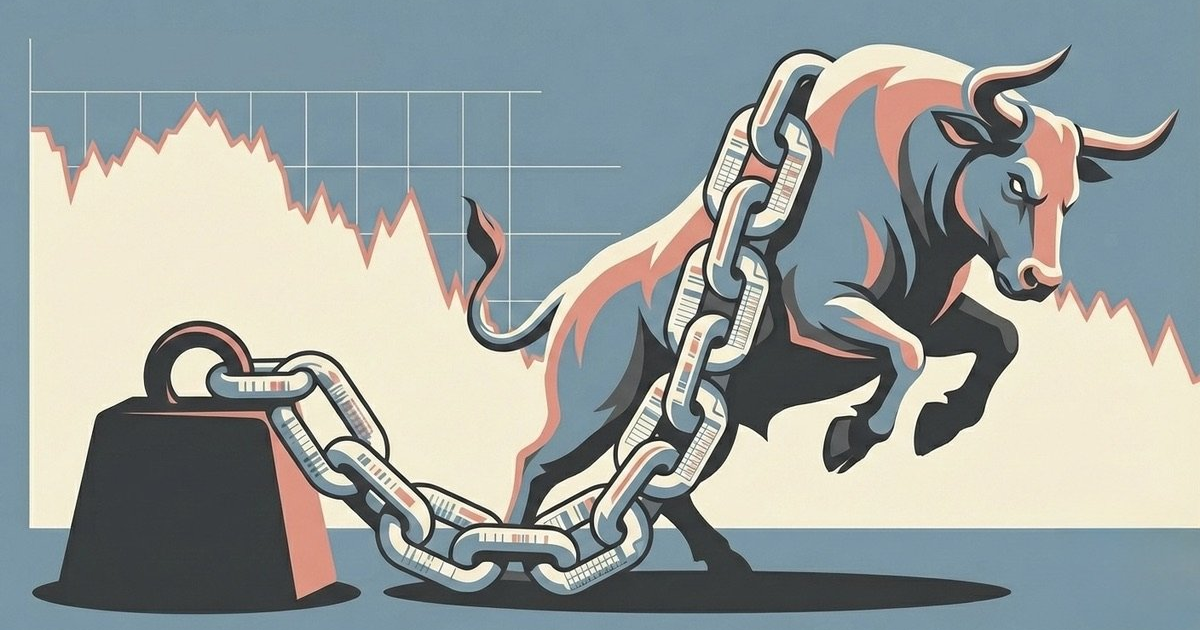
If you've spent any time reading about pharmaceutical innovation, you've encountered Eroom's Law — Moore's Law spelled backward. It describes the observation that the number of new drugs approved per billion dollars spent on R&D has halved roughly every nine years since 1950, falling around 80-fold in inflation-adjusted terms.1
The narrative is seductive: pharmaceutical companies have become bloated and bureaucratic. They've lost their ability to innovative. Management is too risk-averse. If only we could return to the golden age of pharmaceutical research, productivity would soar.
This narrative is compelling, widely believed, and misses the real story.
The apparent decline in R&D productivity isn't about organizational failure or declining innovation. It's driven by three structural forces: escalating trial complexity, a shift toward outsourcing, and increasing patient recruitment costs. Remarkably, around 2010, even with all of these pressures, the trend reversed. Eroom's Law has already been broken.
The Decline Was Real — But So Is the Reversal
The original Eroom's Law analysis, published in 2012, used data through 2010. By that point, the trend was clear and seemingly inexorable: a 60-year exponential decline in drugs-per-dollar. But by 2020, Ringel, Scannell, and colleagues demonstrated that starting around 2010, the trend line changed. By 2018, the industry was producing an additional 0.7 new molecular entities per billion dollars of R&D spending per year — a statistically significant trend reversal.11
The reversal was also visible in value-weighted metrics, for example peak sales per billion dollars of R&D spending also improved. The proximate cause cited was the same mechanism that drove the original decline, but running in reverse: changes in success rates.
By 1990, only 44% of total development cost per NME was attributable to failed molecules. By 2004, that figure had ballooned to 82% — most R&D spending was being consumed by failures. But by 2013, the ratio had shifted back: 60% from failure, 40% from successful molecules. Capital allocation had improved.
What Broke the Law
Three factors converged to bend the productivity curve upward.
The increased use of human genetics is compelling. Drug targets with genetic validation have meaningfully higher clinical success rates. The explosion of genome-wide association studies provided the industry with an improved biological foundation for target selection — companies that used this information benefited.
The shift toward rare diseases is a similarly plausible explanation. When no therapy exists for a disease, you sidestep what Scannell originally called the "better than the Beatles" problem — the progressive difficulty of demonstrating improvement over increasingly effective existing treatments. Rare diseases with clear genetic drivers offered both scientific clarity and a potentially easier regulatory path.
But Trial Costs Keep Climbing — Why?
Even as success rates improved and Eroom's Law was breaking, the cost of running clinical trials has continued its relentless climb. Most commentary on this topic attributes this to "increasing trial complexity." Complexity matters, but it's only part of the story. There are three major factors driving costs upward over time.
Clinical Trial Cost Factor 1: The Complexity Tax
From the 1980s to the 1990s, clinical trial costs increased five times faster than preclinical costs, according to the Tufts Center for the Study of Drug Development.3 Over a 20-year period, the average cost of developing a drug rose at a rate 7.4% higher than inflation, with clinical trials responsible for most of the increase.
When researchers controlled for changes in trial characteristics — the number of patients per site, site work effort, protocol complexity — using hedonic regression methods, the adjusted rates of inflation were one-third to two-thirds less than the unadjusted numbers.4 Growth in the properly adjusted price index was virtually identical to the Biomedical R&D Price Index.
The trials themselves have become dramatically more complicated. Total endpoints have nearly doubled over the past decade, and the number of procedures has escalated by more than 40%.9 Since 2015, the prevalence of protocols with at least one amendment increased from 57% to 76%, and the mean number of amendments per protocol increased 60% to 3.3.6
Trial complexity has increased as a function of scientific progress. These aren't signs of organizational dysfunction — they're the natural consequences of where the science is heading.
Clinical Trial Cost Factor 2: The Outsourcing Premium
Here's a cost driver that most Eroom's Law analyses ignore: the structural shift in who runs clinical trials. Over the past two decades, the pharmaceutical industry has moved from primarily in-house trial execution to overwhelming reliance on contract research organizations. Today, over 50–60% of all clinical trial activities are outsourced to CROs, and the global CRO services market has exploded from roughly $34 billion in 2017 to over $80 billion in 2023 — growing at nearly 9% per year.12
Emerging biopharma companies, which are now responsible for 63% of all trial starts (up from 56% in 2019), have no choice but to outsource.13 They lack the infrastructure, site relationships, and operational scale to run global trials in-house. For them, CROs are a necessity.
The outsourcing trend adds incremental costs not reflected in the "complexity" narrative. CRO margins sit on top of the actual cost of trial execution. Change orders and out-of-scope negotiations are a persistent friction — sponsors using preferred provider CRO models report spending disproportionate time negotiating scope changes rather than running trials.14 Coordination overhead multiplies when work is split across vendors. And the top 10 CROs now capture roughly 69% of total spending on contract clinical services, giving them considerable pricing power.15
The industry is beginning to respond, however. Large pharma companies are shifting from full-service outsourcing to functional service provider (FSP) models, insourcing core functions while selectively outsourcing specialized services. But the structural reality remains: a significant portion of what gets counted as "R&D cost per drug" is CRO margin and coordination overhead that didn't exist when trials were run in-house.
Clinical Trial Cost Factor 3: The Recruitment Crisis
Patient recruitment is the single largest operational cost driver in clinical trials — accounting for an estimated 40% of the total US clinical trial budget, or roughly $1.9 billion per year.16 And it's getting worse.
Screen failure rates — the proportion of patients who begin but don't complete enrollment — have been climbing steadily. The overall average increased to 36.3%, up from 34.7% in 2012. In CNS and neuroscience trials, which represent one of the most active development pipelines, screen failure rates have nearly doubled to 57%.17 Dropout rates have increased 25%, from 15.3% to 19.1% over the same period.
Each screen failure costs approximately $1,200–$2,000 per patient in direct expenses — consent, history, labs, and imaging that produce zero usable data.18 At a 36% screen failure rate across thousands of patients, these costs are enormous. And every day a trial is delayed by slow enrollment costs sponsors an estimated $800,000 in foregone drug sales.
What's driving the recruitment crisis? Much of it connects back to complexity — tighter eligibility criteria, narrower biomarker-defined populations, and increasingly demanding protocols reduce the pool of eligible patients. But there are independent factors too: competition among concurrent trials for the same patients, the logistical burden on participants (70% of the US population lives more than two hours from an academic medical center), and an increasingly inexperienced global investigator base.17 In 2018, 41% of investigators filing form-1572 were first-time filers — the highest proportion in two decades — each conducting an average of just one active trial.
Putting It Together
The three factors compound on each other making positive R&D outcomes more costly over time. Trials are genuinely harder to run (complexity), the industry has shifted to a more expensive execution model (outsourcing), and patients have become progressively harder and more expensive to recruit and retain.
Eroom's Law captured the cost trajectory accurately but arguably attributed it to the wrong causes. When you decompose the cost increase, a significant portion reflects structural shifts in the operating model — outsourcing margins and recruitment waste — rather than pure scientific difficulty.
What This Means
How do we continue to bend the R&D cost curve? Using genetically validated targets where possible, killing failing programs decisively, and building a thoughtful operational model for effective and efficient trial execution.