Industry Analysis
Why Biopharma Can't Consolidate
Tech giants own their markets. Despite decades of mega-mergers, pharma never will.
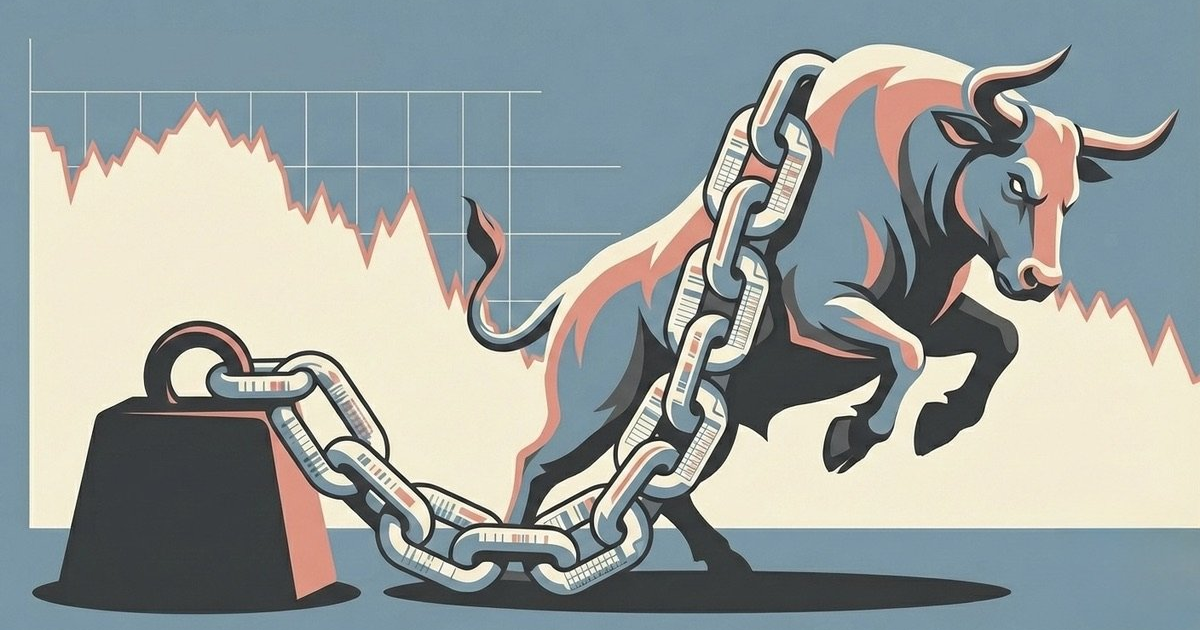
While big tech and biopharma are both high-margin sectors that rely on knowledge work and intellectual property, their industry structures are radically different. The modern biopharma company has formed through successive waves of mega-mergers, which have driven portfolio expansion and increased company scale. It must follow, then, that top biopharma companies have a greater share of total drug sales today than in decades past.
Nope. The opposite is true. Since 2000, Biopharma has become less concentrated and more fragmented.
This is strange. Compare it to tech, where a handful of companies—Google, Apple, Amazon, Samsung, Microsoft—have come to dominate their respective domains. Network effects, economies of scale, and winner-take-all dynamics have made tech one of the most concentrated industries in modern capitalism.
So why didn't the same thing happen in biopharma?
The visualization below illustrates the contrast. Across six markets tracked from 2000 to 2024, tech has consolidated while pharmaceuticals remain fragmented:
Market Concentration: 2000–2024
Tech consolidates. Pharma fragments.
Duopolies: Android + iOS control 99% of mobile. Google + Bing control 94% of search. Windows + Mac hold 92% of desktop. Pharma's top 2 (Merck + Pfizer) control just 11%.
Toggle between Top 1, Top 2, and Top 3 views to see how concentration evolved. The data reveals three distinct patterns:
- Platform markets converge to monopoly/duopoly. Mobile OS went from Symbian/Windows Mobile (70%) to Android+iOS controlling 99%. Network effects and switching costs create winner-take-all dynamics.
- Hardware markets are less concentrated than software. Smartphones never concentrated—top 2 vendors hold just 40% today, roughly the same as 2000.
- Pharma is structurally and perpetually fragmented. The industry's top 2 companies control just ~11% of the global market—8× less concentrated than the average tech duopoly.
The Patent Cliff Problem
Microsoft's 1999 products still generate revenue. Pfizer's 1999 blockbusters—all six of them—are gone.
Pfizer shown as pure prescription pharma (excludes divested Animal Health, Consumer, Nutrition businesses)
The visual tells the story: Microsoft's layers stack and grow—the same products compounding for 25 years. Pfizer's layers rise, peak, then collapse. Lipitor, Zoloft, Norvasc, Celebrex, Lyrica—each dominated, then vanished. This view excludes Pfizer's divested businesses (Animal Health, Consumer, Nutrition)—pure prescription pharma only. The treadmill never stops.
This is the fundamental difference. In software, Microsoft can keep selling incrementally improved versions of Windows for decades. Google's search algorithm continues to get better but doesn't expire. However, for biopharma, patents expire 20 years from filing, providing limited time (usually ~10-14 years) to recoup investments made in R&D, manufacturing and sales, to generate profits before generics and biosimilars erode 60-90% of net sales.
For the most part, there's no amount of brand loyalty or incremental innovation that can save you. Case in point: the leading statin generated $125 billion in lifetime sales, then it went generic and the revenue disappeared almost overnight.
This means even the most successful drug companies are stuck on a treadmill. You can't build a sustainable moat the way tech companies can. Every blockbuster is a temporary miracle that needs to be replaced.
Discovery Creates Land Rushes, Not Moats
When a company discovers a promising new therapeutic mechanism or disease target, it doesn't create a competitive advantage—it creates a gold rush. Suddenly swarms of competitors flood into the space, often leveraging the knowledge generated by the first mover on how to design and sell differentiated product.
Checkpoint inhibitors in immuno-oncology and GLP-1 agonists for diabetes and weight loss are great examples. The first movers got a head start, but within years the space became intensely competitive. In tech, being first often means winning. In biopharma, being first often means validating a market for your competition.
Biology Doesn't Scale
Drug development has a brutal failure rate: roughly 90% of candidates that enter clinical trials never reach the market. And the failures aren't cheap—late-stage clinical trials can cost hundreds of millions of dollars. This inherent uncertainty makes it nearly impossible to achieve the kind of predictable dominance that tech giants enjoy.
A tech company can iterate quickly, learn from small failures, and compound advantages over time. A pharma company can spend a decade and billions of dollars on a drug that fails in Phase III, then start over. Scale doesn't protect against biological risk.
What This Means
The persistent fragmentation of biopharma is the inevitable result of a business model built on temporary monopolies. It's wishful thinking to assume durable tech-style market concentration is possible in biopharma. The fundamental nature of drug discovery imposes constraints that no amount of operational excellence can overcome.